About this Blog

Hi. I've always been interested in the ecological interactions of the monsters in the world of Monster Hunter. This is just a page to compile the canon lore from Capcom and add on my own theories and speculation.
Anything that is not confirmed to be a fact is in bold:
- Words only in bold indicate information from either only the English MH wiki/BannedLagiacrus or the Japanese MH wiki
- *Words in bold surrounded by asterisks indicate information that is present on both wikis or supported by the JP wiki and BannedLagiacrus*
- [Words in bold surrounded by brackets indicate purely speculative ideas and concepts]
Showing posts with label Bird Wyvern. Show all posts

Monday, October 7, 2019

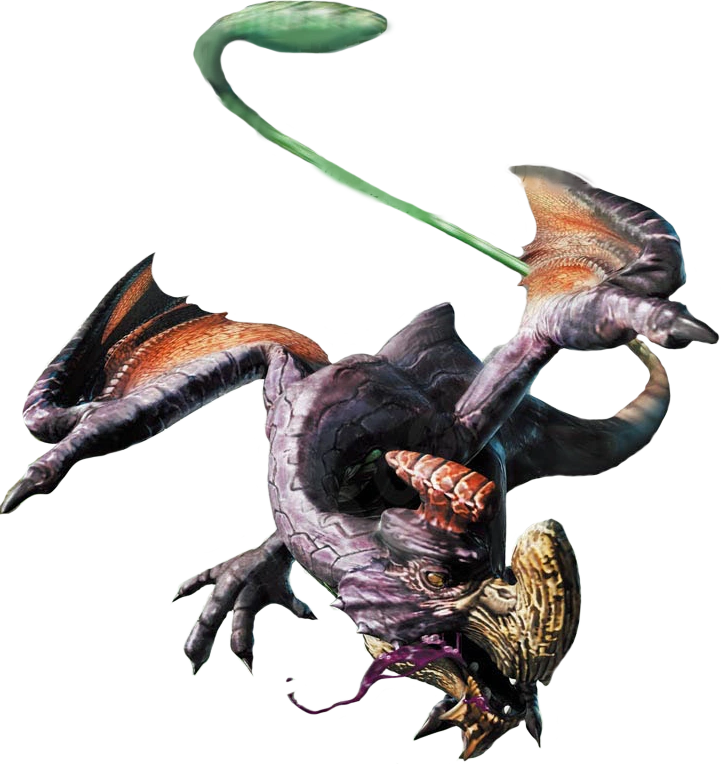
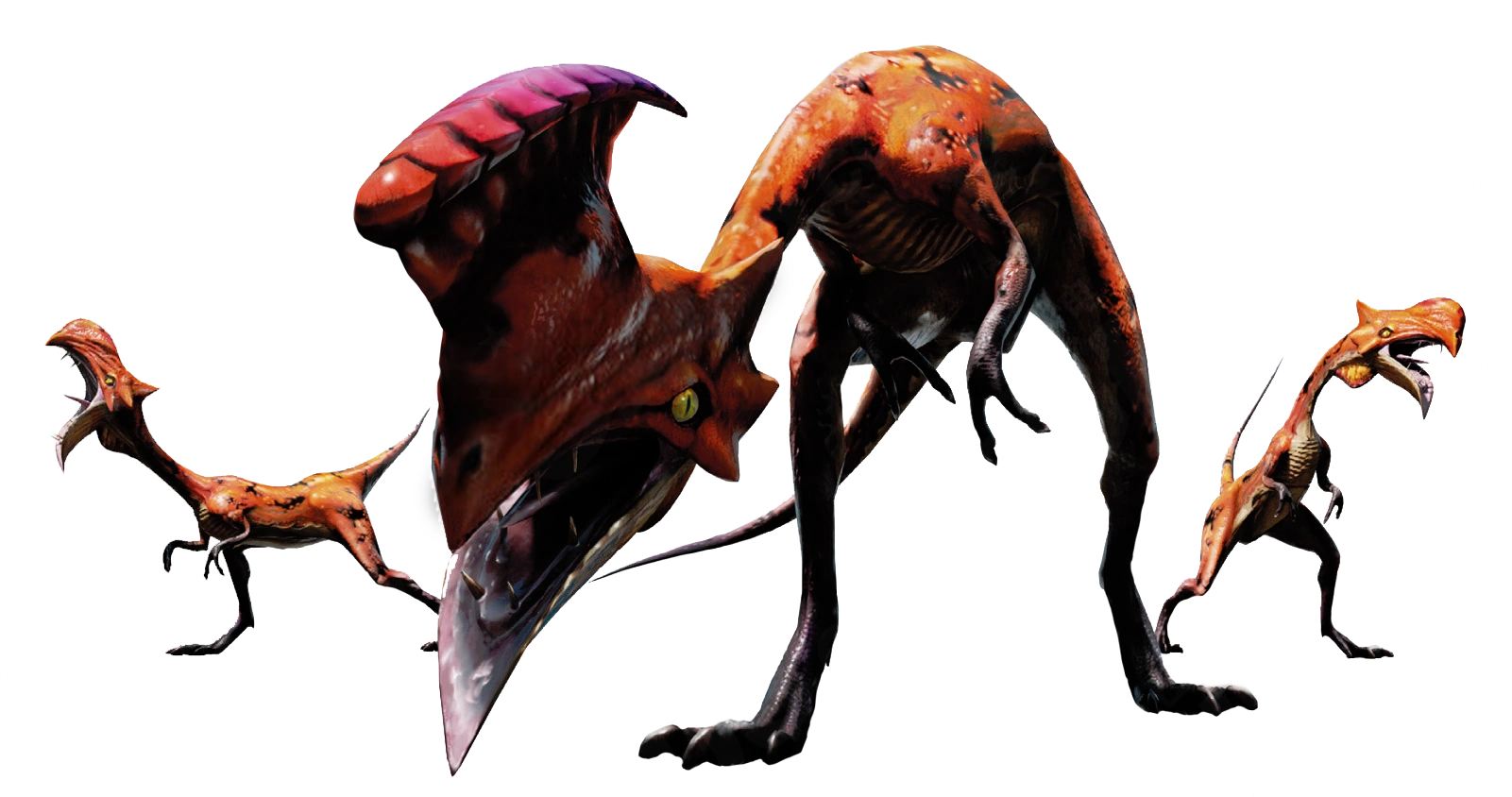
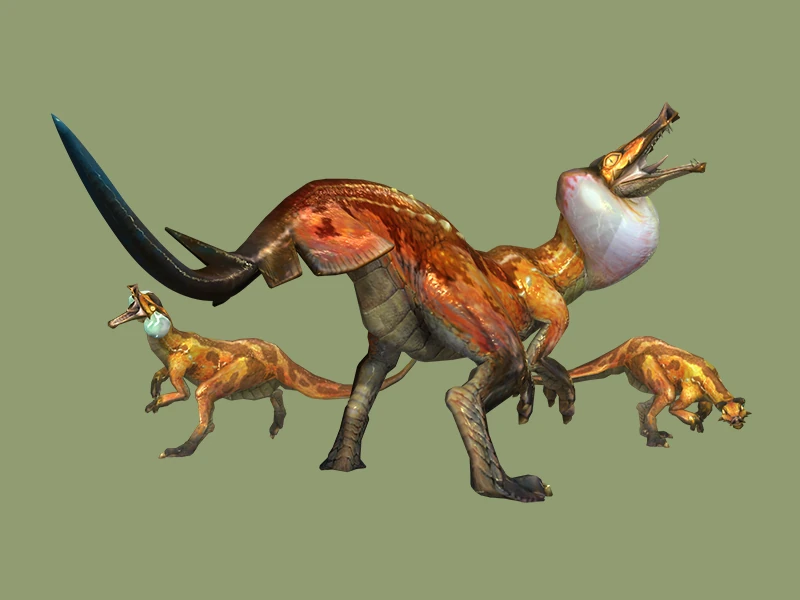
Wroggi/Great Wroggi Ecology

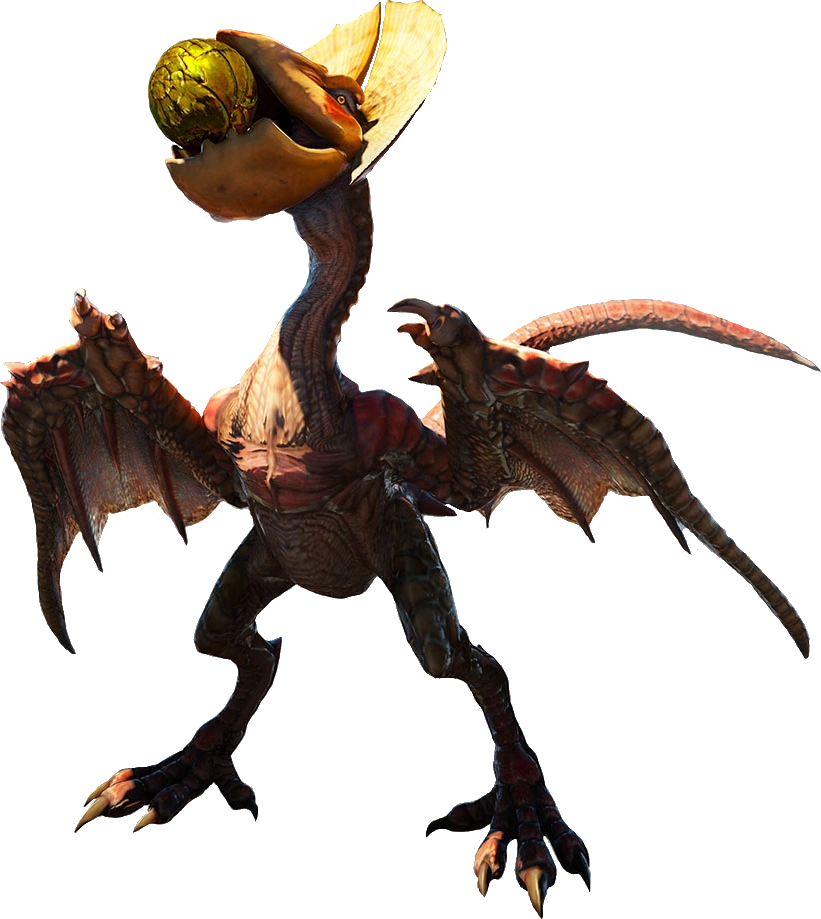
Social pack-hunting Bird Wyverns with orange, salamander-like hides. Inhabiting tropical rainforests and volcanic areas, they exhibit remarkable convergent evolution with the allopatric Iodrome and Ioprey. Females and immature males are known as Wroggi, while the large mature males are known as Great Wroggi. Wroggi have two small poison sacs behind their heads, but as a Great Wroggi matures these sacs fuse into a larger, more prominent sac stretching out under its neck. Great Wroggis also have bony osteoderms on their backs for protection and fin-like lobes on the sides of the base of their tails, [which are possibly used for thermoregulation. The slick mucus on the hides of both Wroggi and Great Wroggi may also play a role in thermoregulation, behaving similarly to perspiration.] As in the other species of social Bird Wyverns, each pack is only led by one alpha male and male Wroggi are chased away when they mature to look for another pack to usurp.

Wroggi and Great Wroggi utilize their venom in hunting either by administering them through the fangs in their beaks or by spraying it out as a deadly mist. Great Wroggi are especially toxic, being able to spray larger clouds of poison which linger longer. [Their poison is crucial in allowing them to thrive in both of their preferred habitats. In the rainforest, their poison reduces the chances of prey escaping in the dense vegetation and allows them to capitalize on the plentiful Bnahabra population. As prey can be scarce in volcanic regions, their poison again increases the success rates of their hunts while allowing them to feed on Bnahabra when Herbivores are scarce.] Possessing venom is essential for Wroggi and Great Wroggi to take down armored and dangerous prey such as Rhenoplos, Bullfango and Slagtoth. Besides that, they are not averse to scavenging for carrion from larger monsters' kills. Large packs may even be able to harass larger monsters and steal their kills by spraying their toxic mist.

Being relatively low on the food chain, Wroggi have bright, aposematic coloration to warn potential predators of their toxicity. Other than that, their speed and agility usually discourages most carnivorous monsters from preying on them. 

Wroggi are closely related to Baggi and Jaggi.


Thursday, July 25, 2019

Baggi/Great Baggi Ecology

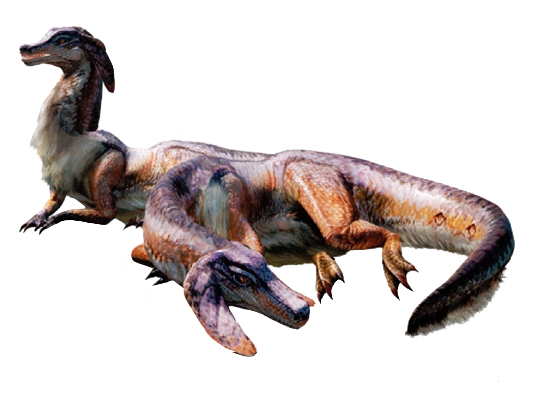
Social pack-hunting Bird Wyverns distinguished by their forwards-pointing cranial crests and predominantly grayish-blue hide and scales. They have some yellow scales on their flanks and tufts of fur on certain parts of their body such as their head, back and tail. Unlike the closely related Jaggi, their tails are fan-like and are designed to stun prey with a blow to the head. Females and immature males are known as Baggi, while mature males are known as Great Baggi. Being the leader of the pack, Great Baggi are much larger in size and have a more developed crest. As in the other species of social Bird Wyverns, each pack is only led by one alpha male and male Baggi are chased away when they mature to look for another pack to usurp.

Baggi and Great Baggi inhabit the freezing Tundra, where their blue hide and scales serve as camouflage and [their larger size compared to their close relatives help them retain heat.] Due to living in this harsher environment, they have also evolved to possess tougher hides than that of Jaggi and sacs that produce sedative compounds. When hunting, they will mix these compounds with their saliva and spit it onto their prey to put them to sleep before literally eating it alive. As food is harder to come by in their frigid arctic habitat, this adaptation to reduces the chances of prey escaping. To bring down their main prey of Popo, Baggi work cooperatively under vocal orders issued by the Great Baggi. They also feed on smaller Herbivores, Bullfango, Neopterons, Giggi and carrion scavenged from the kills of larger wyverns.

Being relatively low on the food chain, Baggi have to be vigilant against the larger monsters inhabiting the Tundra. Usually, their speed and agility coupled with their tranquilizing spit provide an effective defense. Adult Gigginox can turn the tables on the Baggi, as they are extremely protective of their Giggi offspring and will eat any Baggi wandering through the caves they inhabit. 

As mentioned above, Baggi are closely related to Jaggi, as well as Wroggi.

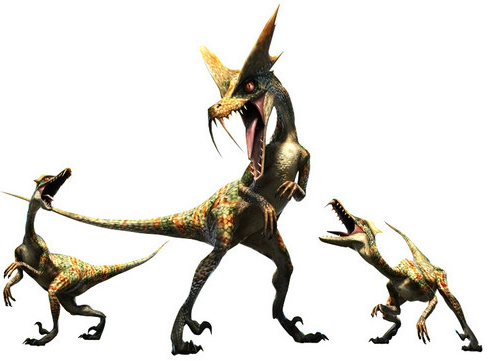
Jaggi/Jaggia/Great Jaggi Ecology

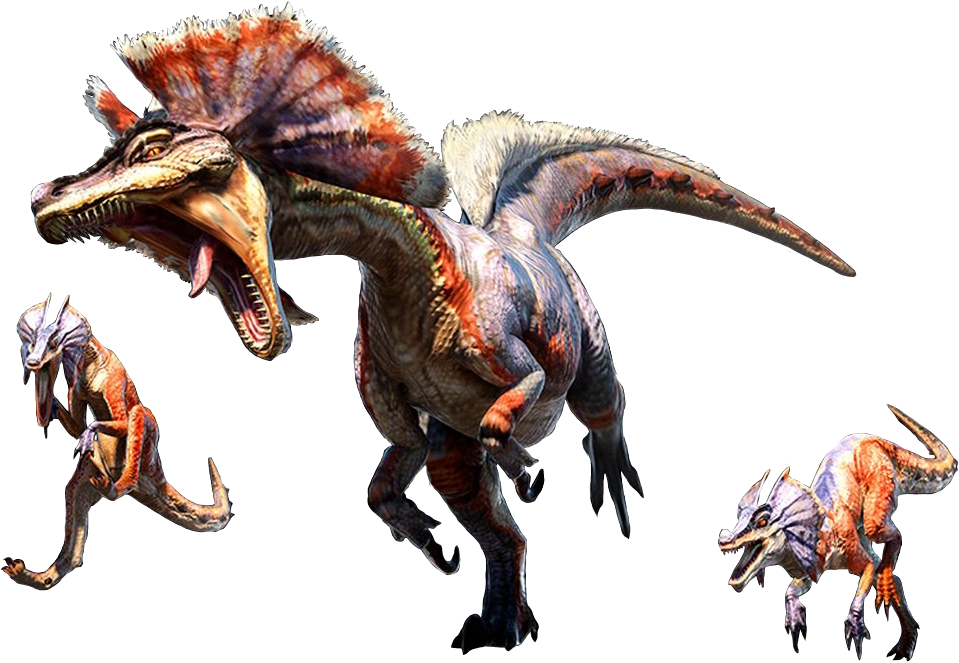
Social pack-hunting Bird Wyverns easily distinguished by the pair of ear-like frills they sport on the sides of their head. Their pack hierarchy is divided into three castes: the small immature male Jaggi, the medium-sized female Jaggia and the large mature male Great Jaggi.

Jaggi are primarily orange in colour with lavender scales present on their head, frills, parts of their forearms and as a stripe running down their backs. Their roles are to patrol the outskirts of the territory, inform the pack about intruders, hunt small prey to feed the pack and assist the Great Jaggi while hunting larger prey. They have short blunt spines protruding from the sides of their tails which can be used to attack prey or defend themselves when threatened.

Jaggia have more lavender scales completely covering their backs and tail, with somewhat fewer orange scales which cover their sides and legs. Unlike the males, their frills are more subdued and hang limply from their heads. Instead of spines, their tails are adorned with fur running down their undersides. This downy fur is present on their bellies as well and is most likely used to incubate their young. Jaggia are responsible for guarding the nest and raising whelps. [To act as effective nest guardians, they are bulkier than Jaggi and even the females of the closely related Wroggi and Baggi, as they do not produce toxins or sleep-inducing compounds and thus have to rely solely on their increased muscle mass and strength. They also lay larger eggs than Baggi and Wroggi which allow more developed whelps to be hatched, shortening the amount of time needed for them to mature into Jaggi and Jaggia.]

Great Jaggi are mostly lavender in colour, only having a single orange stripe running down each side of their bodies and another tangerine stripe on the edges of their frills. Besides that, they have a white mane on their necks and a ridge of white fur running from their backs to their tail, which retains the blunt spines present in juvenile males. As the leader of the pack, Great Jaggi have the most prominent frills. *If their frills are destroyed, they lose all their dignity as a leader and a male.* Each pack is only led by one Great Jaggi at a time, so as Jaggi mature they are chased away to look for another pack to usurp. They have large hooked claws on their forelimbs, [though since they are not used in hunting prey, it is speculated that they use them to fight each other.] Multiple Great Jaggi may fight each other for the control of a pack, and many have been seen with wounds and scars on their bodies. Being the most powerful member of the pack, they lead Jaggi in hunting large herbivores such as Aptonoth using complex vocal commands and protect the pack from major threats such as other wyverns.

Typically, Jaggi are found in numerous locales from deserts to grasslands to forests. However, they are absent from dense jungles, volcanic areas and frigid arctic habitats. On their own, Jaggi hunt small prey such as fish and Kelbi, but under the leadership of a Great Jaggi they can bring down larger herbivores such as Aptonoth and Rhenoplos. [For large prey that they cannot bring down quickly, they utilize a persistence hunting technique where they chase prey over fairly long distances in order to wear them down before cornering the exhausted prey and killing it. This technique may not be as effective in rainforests with thick vegetation, which explains their absence in those areas.] *At a kill, Great Jaggi always eat first, Jaggia eat second and Jaggi eat last.* Some theorize that this is the reason for the disparity in size between the three castes, [or alternatively the behavior may result from the size disparity itself.] Carrion scavenged from the kills of larger monsters also constitute a major part of their diet.

Being relatively low in the food chain, Jaggi have to be wary of other carnivores as their flesh is relatively high in nutritional value. Despite that, their speed and agility acts as a deterrent to larger predators. 


Thursday, April 4, 2019

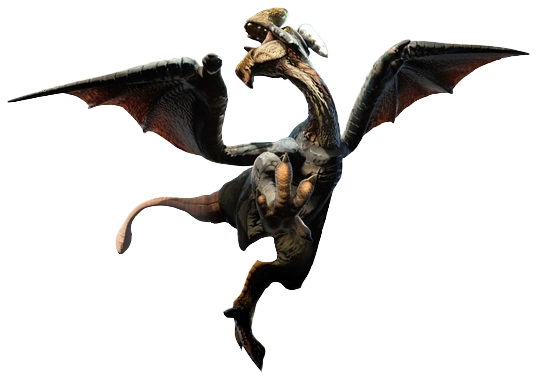
Hypnocatrice Ecology

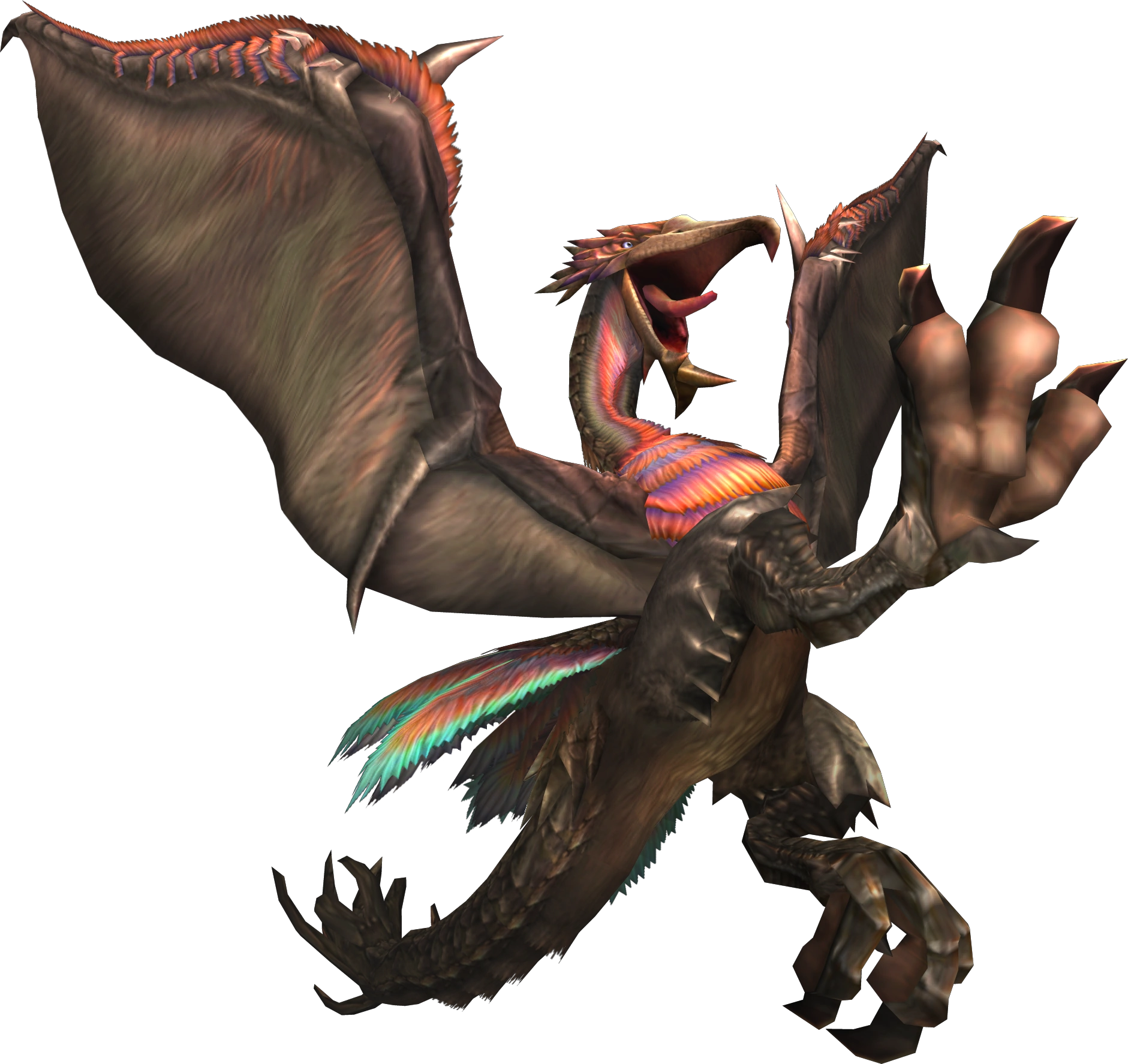
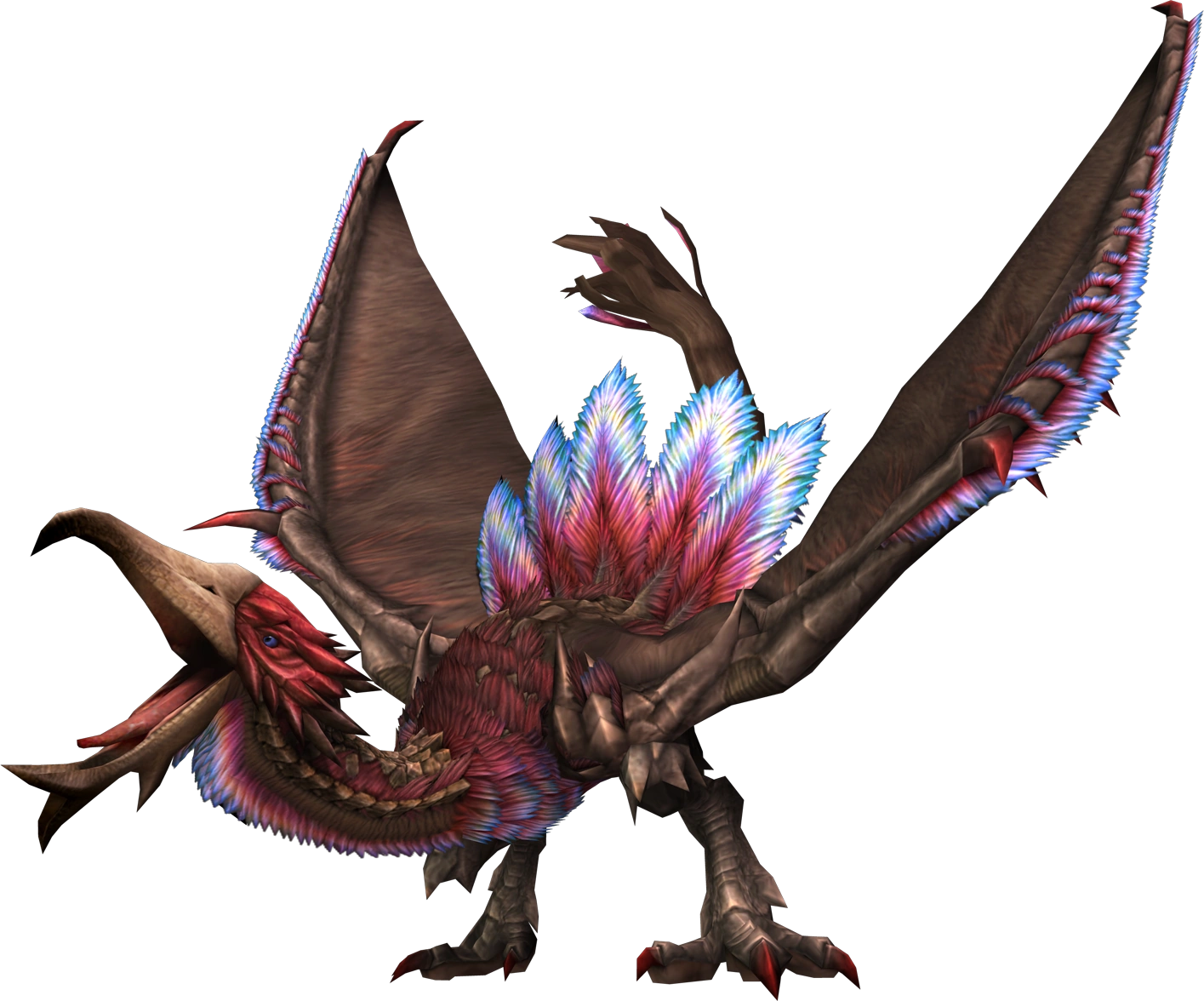
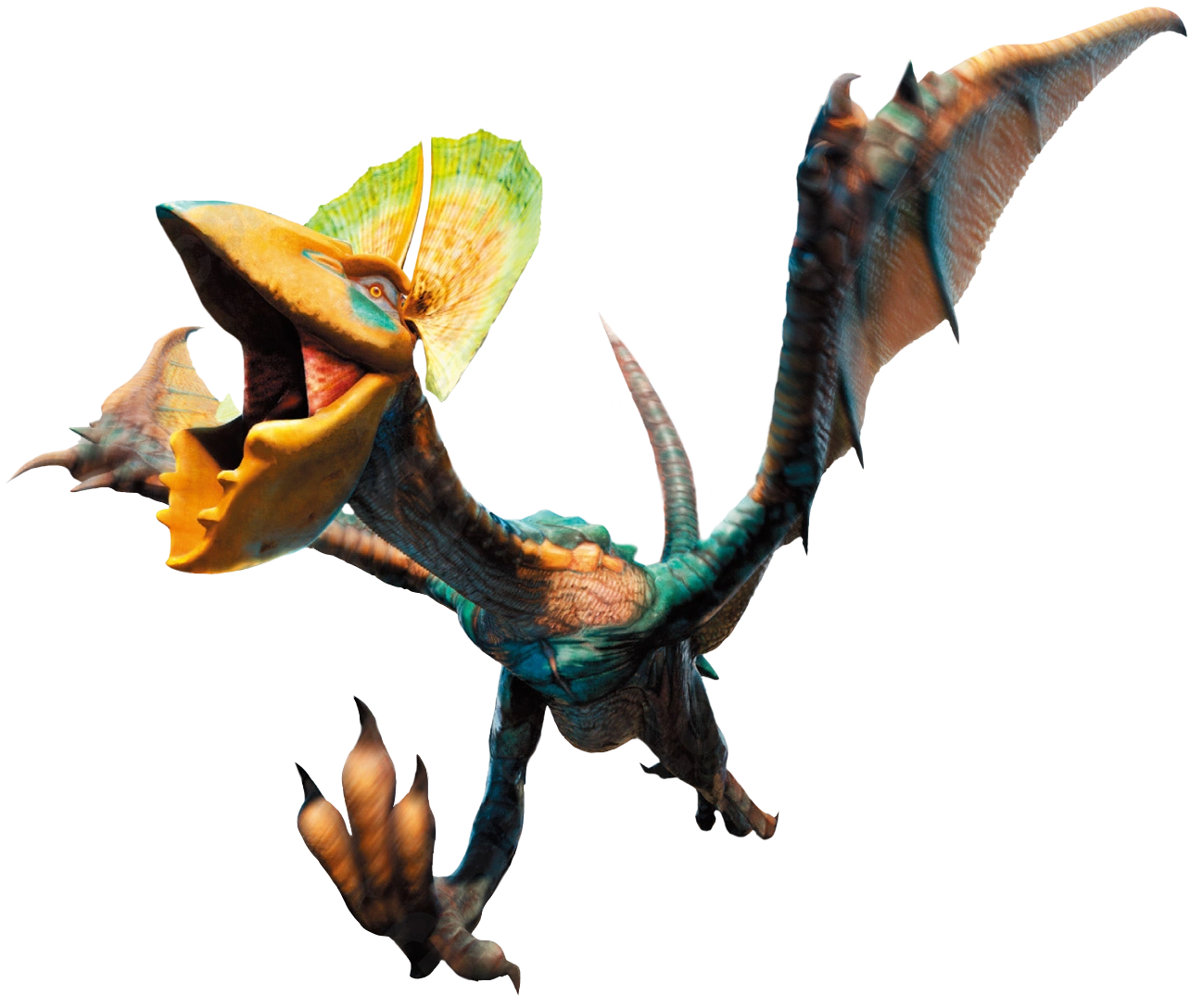
Feathered Bird Wyverns with orange and brown plumage that mostly scavenge on carrion with their sharp hooked beaks, which have two fang-like projections on the lower jaw. Despite their bird-like appearance, Hypnocatrice do not use their feathers for flight and possess membranous wings that are covered in a layer of downy feathers. It is even suspected by some that Hypnocatrice are misidentified Flying Wyverns as their wings are quite different from other Bird Wyverns. Five large display feathers that resemble a fan can be prominently seen on their back and many smaller display feathers can be found at their tail tip as well. While much of their body is feathered, their head, nape, legs and parts of their wings remain bare. Their name comes from their ability to produce and spit a volatile sleep-inducing substance.

Hypnocatrice are primarily found in lush tropical and temperate forests but have also been encountered in desolate desert areas. Although they prefer to feed on carrion most of the time, they are omnivorous and can feed on just about anything. They are known to feed on fish, small animals, insects and many different kinds of plants.*In fact, they actually obtain their signature sleep-inducing compounds from certain foods such as Sleepyfish, Sleep Herbs and insects.* When hunting to feed their offspring, they might put their prey to sleep before carrying it back to their nest, but generally their strong legs are already sufficient in helping them chase down and kill prey. Lacking teeth, they swallow pebbles and grit to help them crush and grind the food in their stomach. These gastroliths may be introduced to a Hypnocatrice at the moment of its birth and mature along with it to become a prized "Hypno Bezoar". The stone's ceramic appearance possibly comes from a combination of the Hypnocatrice's hypnotic fumes and weak stomach fluids, which could have formed a whitish solution that solidifies on the bezoar.

Quite pacifistic by nature, Hypnocatrice prefer to put enemies to sleep and run from the fight. While usually timid, when angered they may also viciously kick and slash sleeping foes with their powerful legs and sharp claws in an attempt to make them leave their territory. Besides that, they can also use their tail as a weapon while fighting. If enraged, they will erect the large feathers on their back to look more threatening.

During the mating season, the feathers of mature male Hypnocatrice will turn a brilliant shade of blue and magenta and they will perform mating dances to attract females. These individuals become known as Breeding Season Hypnocatrice to differentiate them from normal Hypnocatrice, as they become more aggressive during this period.


Wednesday, March 13, 2019

Gypceros/Purple Gypceros Ecology

Omnivorous Bird Wyverns with scaleless stocky bodies covered in a blueish-gray rubbery hide. Their most prominent feature is the lamp-like crest atop their heads. Other unusual features include the peg-like teeth in their jaw and the shape of their beak, which extends upwards much like a nose horn. Besides that, their pink tails have a bulbous tip and can extend to whip enemies due to the elastic properties of their skin.

Gypceros are Bird Wyverns that feed on just about anything, though they particularly favour insects like Flashbugs and Thunderbugs along with mushrooms. Hunters have reported Gypceros mistaking shiny objects in their inventory such as crystals and ores as their food, which leads to the Gypceros chasing them and stealing the items. Although they have been sighted in open fields and forests, they prefer to inhabit dark, humid areas such as swamps, marshlands and caves where their food sources are most commonly found. Their rubbery hide may be an adaptation to their diet and preferred habitats, protecting them from the electrical shocks emitted by Thunderbugs and the predatory Khezu which dwell in caves. As a consequence, Shock Traps are also ineffective on them. [Additionally, their bioluminescence may be an adaptation to living in dimly-lit areas as well.] By clapping their beak and luminous crest together, they are able to generate blinding flashes of light to disorient and blind enemies, [which may be especially effective in dark areas.] The crest is made of either ore or Lightcrystals and varies between different individuals. Being immune to their own flashes, Flash Bombs also have no effect on them. When enraged, their crest will flicker repeatedly and the patches of skin surrounding their eyes will also flush red. During the mating season, males will shine and flash their crests to attract females to their nests. They will also collect shiny objects to impress females.

Gypceros are well-known for spitting poisonous saliva from their poison sacs in self-defense. Their hides resist toxins and poisons, and it is theorized that symbiotic bacteria living on them are responsible for this. Gypceros have even developed mutually beneficial relationships with certain plants which even require Gypceros venom to grow. [These plants produce fruits that Gypceros enjoy feeding on, so Gypceros will spit their poison around them to kill off competing plants while fertilizing them. These plants also rely on Gypceros for spreading their seeds around through their droppings.]

Being the largest and heaviest Bird Wyverns known, Gypceros are sometimes considered to be Flying Wyverns. They have stubby wings and are rather poor flyers, but make up for it by having strong legs which even allows them to run on walls in certain cavernous areas. They contain Dash Extract in their bodies, which allows them to move around without expending much stamina. Despite their size, they are the favoured prey of the Temnoceran known as Nerscylla, which has been observed to feed on Gypceros trapped in their webs and skin their hides for use as a crude form of armour to protect themselves.

Being timid but intelligent, Gypceros occasionally exhibit thanatosis when confronted by threats. They play dead to fool enemies into approaching them, then thrash around to injure them. This behavior is more commonly observed when they are exhausted. Some hunters are sent back to fight the Gypceros they supposedly killed when this occurs.

Gypceros has a subspecies known as Purple Gypceros that tends to live in hotter, more tropical environments although they can be found in all of the same habitats as normal Gypceros. [As large predatory monsters are more common in warmer areas, they have possibly evolved to produce more toxic poison to adapt.] They are also better at defending themselves, being more resilient and stronger than normal Gypceros. Their hide has a more vivid purple colour and their tails are green in colour as well, [probably serving as aposematic colouration to warn predators of their higher toxicity.] Besides that, they use their flashing attacks more frequently in battle and will chain other attacks directly into it.


Monday, March 11, 2019

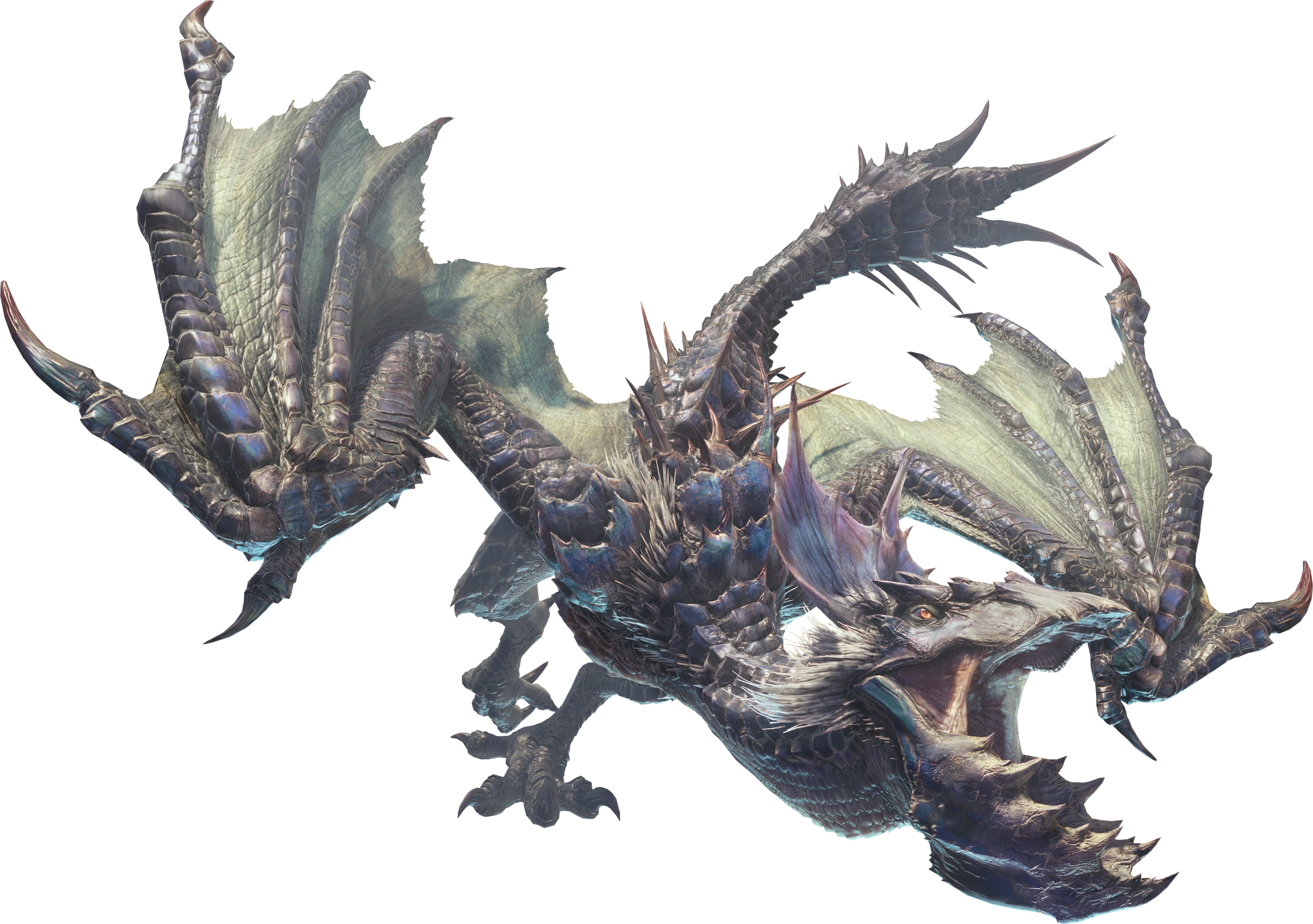
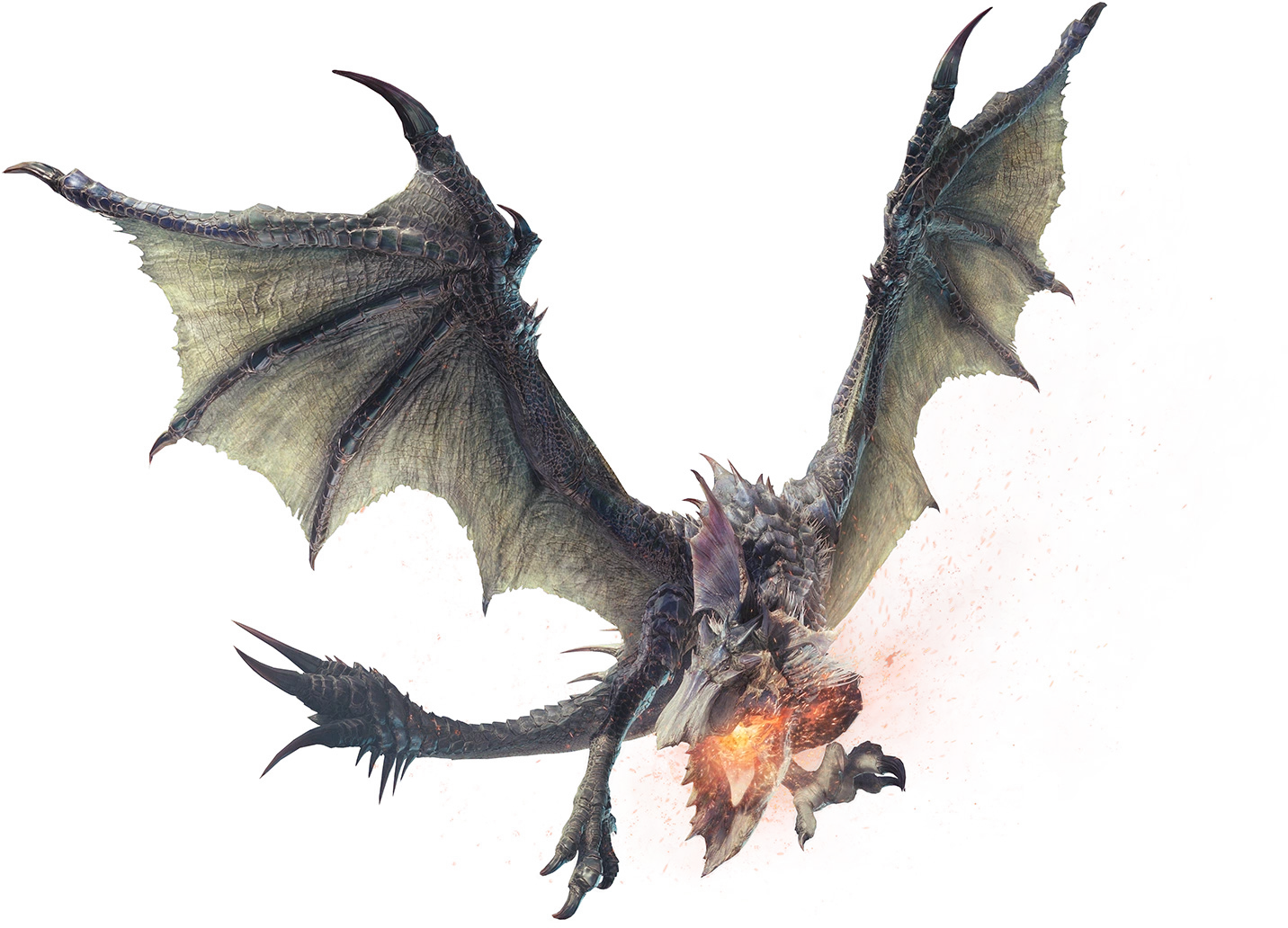
Yian Garuga Ecology

Predatory Bird Wyverns covered with with dark purple tinted shells and scales, along with large defensive spikes on its head and back. Besides being used to scoop up smaller prey like a shovel, its large pointed beak is extremely sharp and able to cut through the flesh of other monsters. The lower beak is larger and has a jagged edge compared to the smooth upper beak. Other notable external features include its pointed ears, tufts of white mane and venomous tail club.

The violent, warlike nature of Yian Garuga makes them one of the most, if not the most feared and dangerous Bird Wyvern species. Such is their aggression that they enjoy picking fights with random monsters just to test their strength. In fact, they are often observed to be missing an ear and/or an eye from fighting so much with other monsters. Yian Garuga are mostly solitary creatures, though they have rarely been seen in pairs possibly during the mating season, and groups consisting of more than two have been seen on certain islands.

Besides Neopterons such as Konchu, Yian Garuga's diet consists of any other monster it can kill, along with carrion. They hunt for Herbivores such as Aptonoth and other Bird Wyverns such as Velocidrome and Velociprey, [though they are not as well adapted to hunt larger prey compared to exclusively carnivorous predatory wyverns.] *Yian Garuga are somewhat poor at locating ground-dwelling Neopterons compared to Yian Kut-Ku, so they often observe where Yian Kut-Kus find their prey and steal their territory. Due to their poor parental behavior, Yian Garuga are even facultative brood parasites of Kut-Ku, as a female Garuga will sometimes destroy the eggs in a Kut-Ku's nest before laying its own.* [Yian Garuga also abstain from killing Kut-Ku during the mating season to prevent killing Kut-Ku whose broods they may have parasitised.]

Yian Garuga are share a similar distribution with Yian Kut-Ku, being found in jungles, temperate forests and swamps. However, they are occassionally found in volcanic areas such as the Volcanic Hollow. It has been suggested that these Yian Garuga may be migrating to follow Yian Kut-Ku or they may be looking for monsters to fight.

In terms of hunting behavior, Yian Garuga sometimes choose to hunt at night where their dark coloration makes them more difficult to spot. Their eyesight is good enough for them to hunt in the dark and their large ears give them excellent hearing. Unlike Kut-Ku, they are not startled or disoriented by loud noises. When hunting, they often stab and peck at prey with their beaks, or envenomate prey with their tail spikes, which respond to shocks by secreting venom. They are nimble enough to perform backflips to whip their tail in front of them when attacking prey, similar to a Rathian. However, unlike Rathian, the venomous thorns on their tails are arranged in such a way that they can also envenomate other monsters while whipping their tails sideways. [This is probably a defensive adaptation as they are physically frailer than many larger wyverns. Besides that, the large spines on their head and back,] together with their white manes and large ears, make them appear more intimidating to larger wyverns. Other notable characteristics include possessing the toughest shells of any Bird Wyvern, and powerful flame sacs on par with that of some Flying Wyverns. Similarly to Rathian and Rathalos, their mouths will constantly burn with fire when enraged. 

Yian Garuga are noted to be especially crafty and are known to observe opponents rationally even when angered. Hunters have reported that they will avoid pitfall traps, especially when enraged. Even if they are caught in pitfall traps, their strong legs give them high agility and allow them to escape quickly. The sharp claws on their feet also cut through the traps with ease. Besides that, they will use their supersonic roars to stun more evasive prey like Velocidrome as well as their opponents while in combat.

Just as in their close relatives Yian Kut-Ku, four-toed variants of Yian Garuga which are probably recent mutations have appeared and are becoming more and more common. In the New World, the Yian Garuga there have possibly evolved more well-developed wings potentially allowing them to be more agile in the air. Special Tempered Scarred Yian Garuga in the New World which have lost an eye and an ear after surviving a battle are even able to rapidly fire multiple fireballs in quick succession while airborne.


Thursday, March 7, 2019

Yian Kut-Ku/Blue Yian Kut-Ku Ecology

Bird Wyverns characterized by their fan-like ear frills and large, yellow beaks. A orange stripe runs centrally down the ridge of the upper beak, and there are orange markings under each eye as well. The significantly larger and bulkier lower beak is used to dig and scoop up prey such as Konchu hidden underground. Its body is covered in orange-pink plates and beige scales while its wing membranes are deep blue in colour.

Due to their lightweight frame, small stature and hollow bones, Yian Kut-Ku can move very fast on the ground and are competent fliers. However, they are not as agile in the air as some larger Flying Wyverns so they tend to spend more time on land. Thanks to the large ear frills surrounding their ears, they have an extremely powerful sense of hearing. Although this allows them to detect and avoid potential threats, loud sounds will startle and disorient them. While they are fully capable of defending themselves against smaller predators such as Velocidrome and their packs, they are often preyed upon by larger predators like Rathian and Najarala. When confronted by a potential threat, they attempt to appear bigger than they really are by spreading their wings, flaring out their ear frills, and shriek out a loud squawking roar. They hope that this show of bravado will discourage predators but if it fails they will immediately flee the area, [particularly if the predator in question is larger and more powerful]. Yian Kut-Ku are also capable of spitting a flaming liquid in self-defense, albeit less effectively than larger wyverns which are better adapted to using their flame sacs offensively. While these fireballs are effective in killing smaller monsters, they may not successfully deter larger wyverns. Like many wyverns, they may use their tail as a weapon in combat. 

Yian Kut-Ku inhabit a wide variety of tropical and temperate habitats and are only absent from harsh environments such as deserts. Very rarely, they travel to volcanic areas, possibly to consume coal and ores to fuel their flame sac. They are omnivores feeding on ground dwelling Neopterons, worms and honey. Adults are even capable of swallowing Konchu whole when they roll up into a ball for protection. They also use their beaks to crush hard-shelled nuts and fruits. Similar to Hypnocatrice, they swallow rocks and stones as gastroliths to help them digest their food.

*During breeding season, female Yian Kut-Ku grow feathers on their abdomen which are used to keep their eggs warm. These feathers can be considered a remnant of their ancestors.* After the eggs hatch and the chicks are born the mother watches over them and feeds them honey and insects till they reach a certain age. *If the weather is favourable throughout the year, Yian Kut-Ku will breed all year round. This "population explosion" of Yian Kut-Ku may cause food to become scarce and many will die as a result though the population will gradually recover again.*

Yian Kut-Ku are closely related to Yian Garuga. However, Yian Garuga are highly aggressive towards Yian Kut-Ku. Sometimes a Garuga will take over a Kut-Ku's territory and even kill the smaller Bird Wyvern. *Female Yian Garuga will also destroy the eggs of a Kut-Ku and lay their own eggs in the nest, leaving the Kut-Ku as a victim of brood parasitism.*

Yian Kut-Ku also have a relatively rare Subspecies known as Blue Yian Kut-Ku which has similar behaviour. It is not known if Blue Yian Kut-Ku are a true subspecies that prefers to live in slightly different environments or if they are just a result of genetic mutation. Their shell is blue instead of pink and is more resistant to fire. Besides having a stronger flame sac and better aerial abilities, they are also physically stronger than normal Yian Kut-Ku especially when enraged.

Although Yian Kut-Ku were originally observed to have three toes on its feet, four-toed Yian Kut-Ku have appeared and have replaced all, if not almost all of the three-toed variants. This four-toed variant is thought to be a recent mutation.


Wednesday, March 6, 2019

Giadrome/Giaprey Ecology

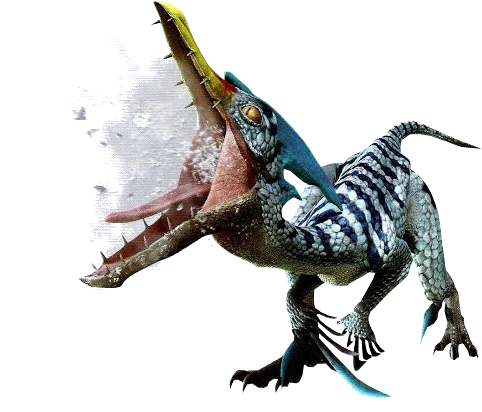
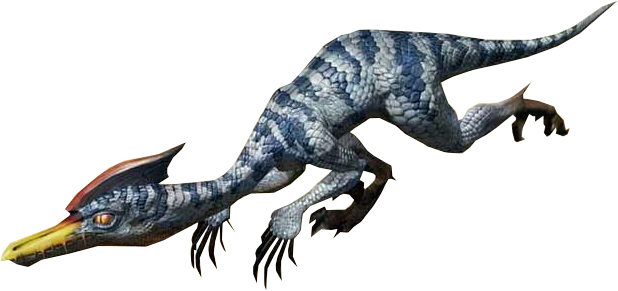
Social pack-hunting Bird Wyverns with white-scaled bodies covered with blue stripes. Nearly identical to Velociprey and Velocidrome, they have a single backwards-pointing crest on their heads and their beaks are filled with thin, spike-like teeth. Their forelimbs each have seven razor-sharp claws, and each of their hindlimbs bear an enlarged claw on the first digit which is held off the ground.

Mature adults are known as Giadromes while immature subadults are known as Giaprey. As the alpha leader of the pack, Giadromes are larger in size and have a more prominent, brighter blue crest which shows that they are sexually mature. The middle claws of their forelimbs and their enlarged toe claws are further enlarged and bright blue in colour as well. *Unlike closely related Bird Wyverns such as Velociprey and Velocidrome, they are much more social and several packs may merge to form a larger one at times.* A Giadrome from one pack can even control and direct Giaprey from another pack. 

Giaprey and Giadrome packs are only found in snowy mountainous areas and frigid arctic regions. The coloration of their scales helps them blend easily into their environment and their hide is more insulated against the cold than most other Bird Wyverns. They mainly prey on small Herbivores such as Kelbi, Anteka and Popo but will often scavenge carrion from the kills of larger wyverns.

Being pack hunters, Giaprey and Giadrome are relatively intelligent and their highly-developed brains allow them to formulate hunting plans quite quickly. When hunting, they use a range of calls to communicate with each other to cooperate effectively. [Their large, yellow eyes likely give them good eyesight. Similar to Velociprey and Velocidrome, they hold on to prey with their teeth and use their claws to kill it.] However, they can also spit a freezing cold liquid that can freeze small monsters in their tracks. They have evolved this ability to better capture prey in their harsh habitats.

Giaprey and Giadrome are most closely related to Velociprey and Velocidrome, and are also closely related to Genprey and Gendrome as well as Ioprey and Iodrome.


Iodrome/Ioprey Ecology

Social pack-hunting Bird Wyverns covered with a slimy orange salamander-like hide with black blotches. They have a single crest located on their snouts and small horns on the back of their heads. Their forelimbs only have two clawed digits each, and each of their hindlimbs lack the enlarged claw on the first digit found in its close relatives. They instead rely more on their poison which can be spat out or administered through the four pairs of venomous fangs in their beaks.

Mature adults are known as Iodromes while immature subadults are known as Ioprey. As the alpha leader of the pack, Iodromes are larger in size and have a much larger and more prominent purple-tipped crest. These crests are probably used for sexual appeal by showing that the Iodrome is sexually mature and may have a thermoregulative role in scorching volcanic areas. Packs are only led by one dominant Iodrome, as the other adults are chased away upon reaching maturity to look for another pack to take over. [It's probable that a breeding Iodrome pair will temporarily unite their packs during the breeding season.]

Ioprey and Iodrome packs can be found in a wide variety of areas from jungles to mountainous areas to swamps and even volcanoes. This is due to the fact that they prey mainly on Neopterons such as Vespoid and Hornetaur, which is also the main reason for the evolution of their poison sacs and [their mostly toothless beaks which are used to crush Neopteron shells. Thus, they are able to survive in a broad spectrum of harsh and less fertile environments where large Herbivores are less plentiful.] However, given the chance they will scavenge for carrion or hunt for any large monster their poison can bring down, which includes Herbivores like Apceros, Aptonoth and Slagtoth and even small Bird Wyverns such as Yian Kut-Ku. They are a major hazard to miners as they frequently dwell in volcanic mining tunnels. [Other than that, their amphibian-like skin keeps them cool in hot volcanic areas as the mucus evaporates, acting like a form of perspiration.] 

Despite being quite low in the food chain, Ioprey and Iodrome are not often hunted by larger wyverns, as even their scales and bones are filled with toxins. Their bright aposematic coloration of their hide acts as a warning to potential predators. Their speed and agility also discourages predators from attacking them.

Ioprey and Iodrome are closely related to Velociprey and Velocidrome, Genprey and Gendrome, as well as Giaprey and Giadrome.


Tuesday, February 12, 2019

Gendrome/Genprey Ecology

Social pack-hunting Bird Wyverns with green and orange scales covering their bodies. Their most prominent features are the pair of backwards-pointing crests above their eyes and the pair of oversized fangs in their jaws. Their forelimbs each have three clawed digits, and each of their hindlimbs bear an enlarged claw on the first digit which is held off the ground.

Mature adults are known as Gendromes while immature subadults are known as Genprey. As the alpha leader of the pack, Gendromes are larger in size and have a larger pair of crests. These crests are used for sexual appeal by showing that the Gendrome is sexually mature. Packs are only led by one dominant Gendrome, as the other adults are chased away upon reaching maturity to look for another pack to take over. [It's probable that a breeding Gendrome pair will temporarily unite their packs during the breeding season.]

Typically, Genprey and Gendrome packs are found in open environments like deserts and more sparsely forested areas compared to Velociprey and Velocidrome, where their coloration is an adaptation to camouflage better in these areas. They mainly prey on Herbivores such as Apceros and Aptonoth. Besides that, they often scavenge carrion from the kills of larger wyverns.

Being pack hunters, Genprey and Gendrome are relatively intelligent and their highly-developed brains allow them to formulate hunting plans quite quickly. When hunting, they use a range of calls to communicate with each other to cooperate effectively. [Their large, red eyes likely give them good eyesight.] As they inhabit open areas where prey can escape easily, they have evolved paralytic venom in their fangs and claws capable of paralysing prey ten times their size in mere seconds. It is also likely that their venom has also evolved to deal with armoured prey such as Apceros and Rhenoplos. They are immune to their own venom, as the skin under their scales is able to neutralise the paralytic toxins. Their packs can pose a major threat to the general public as they are more common than some of the aggressive Flying Wyverns that are native to the areas they inhabit.

Genprey and Gendrome are quite low in the food chain and can easily end up as prey for larger wyverns, though their speed and agility usually discourages that. Their neurotoxic venom is also capable of paralyzing large Flying Wyverns. Despite that, they are still often attacked by the aggressive herbivorous Monoblos and Diablos, and Shrouded Nerscylla may even feed on them to sequester their neurotoxins for their own use. [Other monsters like Tigerstripe Zamtrios or even Desert Seltas may do so as well, but this is unconfirmed.]

Genprey and Gendrome are closely related to Velociprey and Velocidrome, Giaprey and Giadrome, as well as Ioprey and Iodrome.

Monday, February 11, 2019

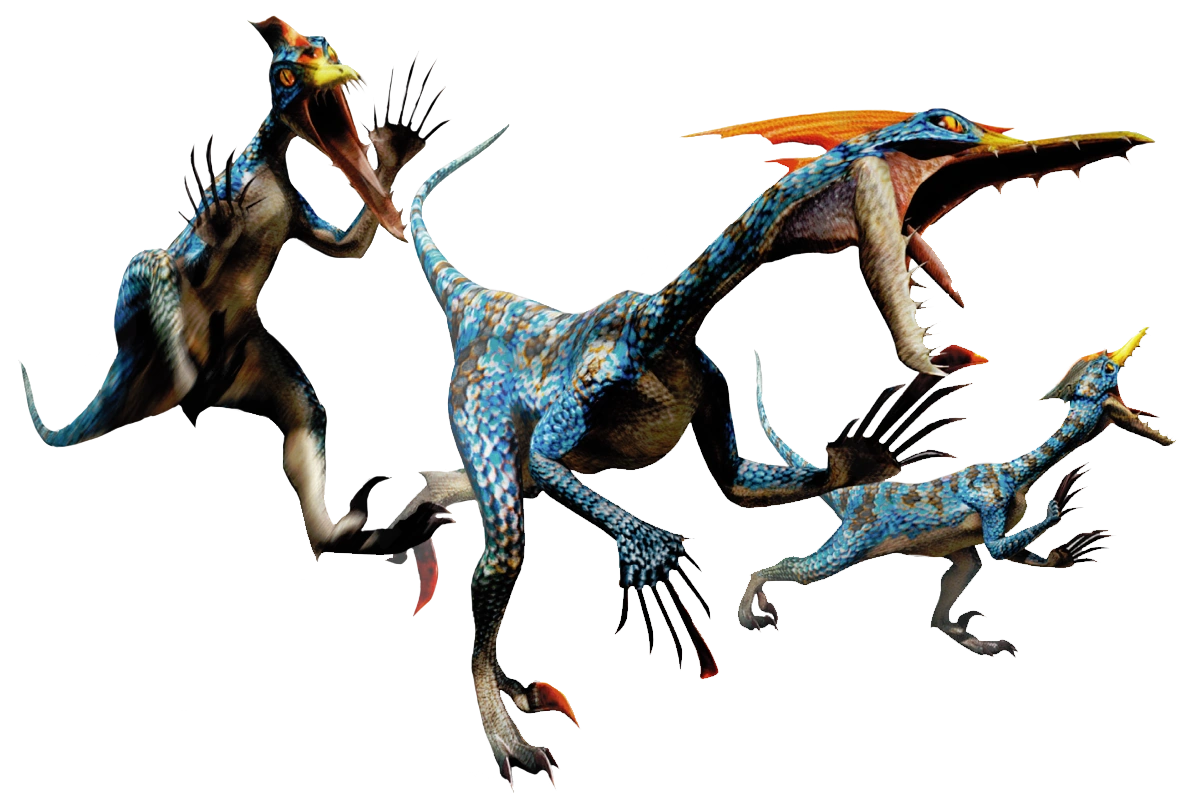
Velocidrome/Velociprey Ecology

Social pack-hunting Bird Wyverns with blue-scaled bodies covered in black stripes. They have a single backwards-pointing crest on their heads and their beaks are filled with thin, spike-like teeth. Their forelimbs each have seven razor-sharp claws, and each of their hindlimbs bear an enlarged claw on the first digit which is held off the ground.

Mature adults are known as Velocidromes while immature subadults are known as Velociprey. As the alpha leader of the pack, Velocidromes are larger in size and have a more prominent, brighter red crest that shows that they are sexually mature. The middle claws of their forelimbs and their enlarged toe claws are further enlarged and bright red in colour as well. Generally, packs are only led by one dominant Velocidrome, as the other adults are chased away upon reaching maturity to look for another pack to take over. [However during the breeding season], a pair of Velocidromes may lead a single pack together as it improves the hunting strength of the pack and it allows for the pack to split into two groups for hunting.

Typically, Velociprey and Velocidrome packs are found in forested tropical and temperate areas. They mainly prey on small Herbivores such as Kelbi, Mosswine and Aptonoth as well as small Neopterons like Vespoid. Besides that, they often scavenge carrion from the kills of larger wyverns.

Being pack hunters, Velociprey and Velocidrome are relatively intelligent and their highly-developed brains allow them to formulate hunting plans quite quickly. When hunting, they use a range of calls to communicate with each other to cooperate effectively. [Their large yellow eyes likely give them good eyesight.] They normally attempt to surround prey, giving it little chance of escape before pouncing and attacking with their claws. Smaller prey can be killed by a Velocidrome with a single slash of their toe claw. Large packs are capable of bringing down prey larger than young Aptonoth, [in part due to their unique dentition. Their fangs are not adapted for cutting; rather they are adapted for holding onto prey.] Despite looking delicate, they are surprisingly hard to break and it is said that even bombs are unable to shatter them. [They use these teeth to latch on to larger prey while slashing with their claws to kill it.] Occasionally, packs will raid villages when food is scarce.

Velociprey and Velocidrome are quite low in the food chain and can easily end up as prey for larger wyverns, though their speed and agility usually discourages that. Besides acting as warning colours, [their blue scales are actually iridescent. When this iridescence is coupled with their swift movements, it disorients predators and allows them to better evade attacks.] *A Velocidrome spends most of its time patrolling its territory for intruders.* Being heavily set in its pack mentality, it will call for its pack before attacking the threat.

Velociprey and Velocidrome are most closely related to Giaprey and Giadrome, and are also closely related to Genprey and Gendrome as well as Ioprey and Iodrome.